2 fists of vegetables
Try leafy greens, broccoli, tomatoes or mushrooms. Raw and cooked vegetables take up different amounts of space.
 HeartQIQuality Intelligence for Prenatal Nutrition
A higher weight before pregnancy does not mean you already get enough nutrients. Let us make room for vegetables, protein and satisfying meals—one practical step at a time.
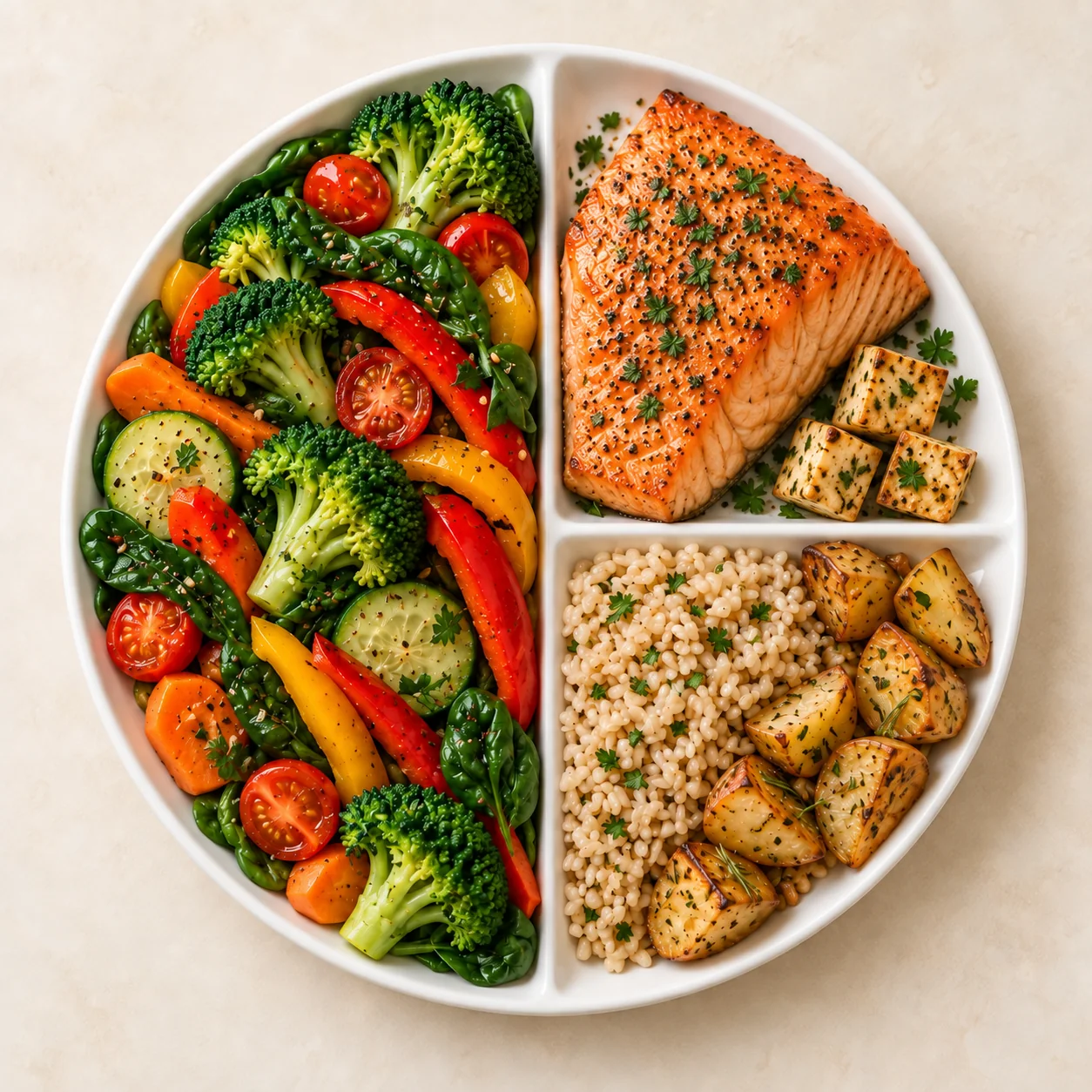
Picture about 2 fists of non-starchy vegetables, 1 palm of protein food and 1 fist of grains or starchy food. Together they make the 2–1–1 plate: roughly half vegetables and a quarter each of protein and starch.
2 fists of vegetables · 1 palm of protein · 1 fist of starchTry leafy greens, broccoli, tomatoes or mushrooms. Raw and cooked vegetables take up different amounts of space.
A palm-sized portion of cooked fish, poultry or lean meat is a useful visual guide. Eggs, milk and tofu need their own portions.
Rice, oats, bread, noodles or potatoes belong in the meal. Choose whole grains often; do not eliminate carbohydrates.
Your hand makes portions easier to picture, not a strict limit on food. Adjust for hunger, stage of pregnancy and your own care plan.
Try this order within the same meal. It can help you remember the foods that are easy to miss. Small studies in gestational diabetes suggest lower post-meal glucose; they do not prove improved birth outcomes. Keep the complete meal and follow your individual glucose plan.
71 g/day is a minimum reference in the US system, not a finish line. Protein needs generally rise in the second and third trimesters as maternal and fetal tissues grow. Your own amount depends on your pre-pregnancy body size, pregnancy stage, food intake and health; ask your prenatal team. The number means protein inside foods—not 71 g of meat.
In EFSA’s separate reference system, the additional protein above its own non-pregnant baseline is 9 g in the second trimester and 28 g in the third. These figures must not simply be added to the US 71 g minimum.
One cooked egg ≈ 6 g; 250 ml milk ≈ 8 g; 90 g cooked lean beef ≈ 25 g; 150 g firm tofu ≈ 15 g. Spread sources across meals and snacks.
Choose familiar foods and see how protein adds up across meals and snacks.
These are selected foods only; the number cannot tell whether your full day has enough protein.
Estimates are rounded: this tool does not count protein in grains or vegetables. You may need more than 71 g in the second and third trimesters; it is a minimum reference, not your personal goal; do not force food for a number. Follow your personal plan if you have kidney disease.
Questions about your food choices? Message @heartqi on WhatsApp or Telegram.
If vegetables rarely appear on your plate, add one fist at the next meal. Washed frozen vegetables count. Put them on the plate before serving rice or noodles.
Track trends with your prenatal team. If your pre-pregnancy BMI was in the overweight or obesity range, do not assume that eating less is the answer. Protect protein, vegetables, whole grains and the nutrients your baby needs.
ACOG suggests 8–12 cups of water across the day throughout pregnancy. There is no required separate quota for each trimester; comfort, heat, activity and illness can change your needs.
Take small, frequent sips. If you cannot keep fluids down, pass very little or dark urine, contact your maternity team.
Keep a glass or bottle nearby and drink across the day. Heat and activity may increase what you need.
If night-time trips to the bathroom interrupt sleep, drink more of your water earlier. Do not sharply restrict fluids without clinical advice.
Choose safe drinking water; warm boiled water may feel more comfortable. Safe cool water is not itself prohibited. Do not replace water with sugary drinks, and avoid alcohol. Follow your own plan if fluids are medically restricted.
The WHO adult recommendation counts salt from all foods and seasonings—equivalent to under 2 g sodium. The salt shaker is only part of the total.
Compare labels and choose lower-salt foods more often. If local guidance recommends iodized salt, use it without adding more salt overall.
Use these food groups as a memory aid, then build meals around your needs, culture and local guidance.
↗02 / HEARTQIProtein grams are not the weight of a food. Mix sources through the day and use food labels for your usual products.
↗03 / HEARTQIUse the plate as a flexible pattern. Food availability, appetite, culture and your care plan decide the details.
↗04 / HEARTQIMovement supports well-being and may help post-meal glucose. Start within your own capacity and prenatal advice.
↗05 / HEARTQIWe separate broadly accepted nutrition guidance from smaller studies and teaching estimates.
↗Each number and suggestion has a source. Where evidence is limited, we say so clearly.
One fully cooked egg (≈6 g) + 250 ml pasteurized milk (≈8 g), with oats and fruit.
90 g cooked lean beef (≈25 g), a generous vegetable side and buckwheat or rice.
170 g plain Greek yogurt (≈15 g); check the product label.
150 g firm tofu (≈15 g) + 150 g cooked lentils (≈12 g), vegetables and noodles.
About 81 g protein from the named foods; grains and vegetables may add a little more. This is a teaching example; 81 g does not prove that your own need is met, especially in the second and third trimesters. Swap sources while keeping complete meals.
In Kazakhstan, there is no need to abandon familiar meals. Keep the taste; make vegetables and a clear protein source easier to see.
Keep the cooked meat and noodles. Add a generous side of washed vegetables or a cooked vegetable dish. If the meat is very fatty, choose a leaner piece when you can.
Add vegetables and a well-cooked protein food. Begin with vegetables and protein, then enjoy the rice or noodles as part of the complete meal.
An egg cooked through, plain pasteurized yogurt or milk, oats and fruit can make protein easier to spread across the day.
Notice which meal lacks a clear protein food. Add one familiar choice without changing everything else.
Add one fist of vegetables to a meal that already feels manageable. Frozen or cooked vegetables count.
Try vegetables → protein → starch in one complete meal. Note your comfort and questions for your care team.
Have a question about your next meal? Message @heartqi on WhatsApp or Telegram. Please do not send sensitive medical records in a first message. For urgent symptoms, contact local maternity care.
Leave your email to subscribe to practical pregnancy nutrition guides and meal ideas. No account is needed; this form does not send questionnaire answers.